
Website for Electricians: What Actually Gets the Phone
17 September 2026
Why Most Electrician Websites Lose Jobs Before the Phone Rings
A website for electricians isn't a brochure — it's the first interview a homeowner runs before they ever pick up the phone. Most people research a contractor online before hiring, checking a site alongside reviews and photos to decide who gets the call. Yet most contractor websites convert only a small share of visitors, according to home service marketing data — meaning traffic is often there, but the site itself is quietly turning people away.
That's the real cost of weak electrician website design: people find you, hesitate, and call the next name on the list. Fixing that isn't about a flashier logo or a slicker homepage slider. It's about treating the site as a conversion tool — one that runs 24/7, whether or not you're already booked out from referrals.
What a Website for Electricians Actually Needs
A generic small-business template won't cut it, because electrical work carries urgency, safety concerns, and licensing questions other trades don't always face the same way. A site built specifically for the trade needs a few non-negotiables.
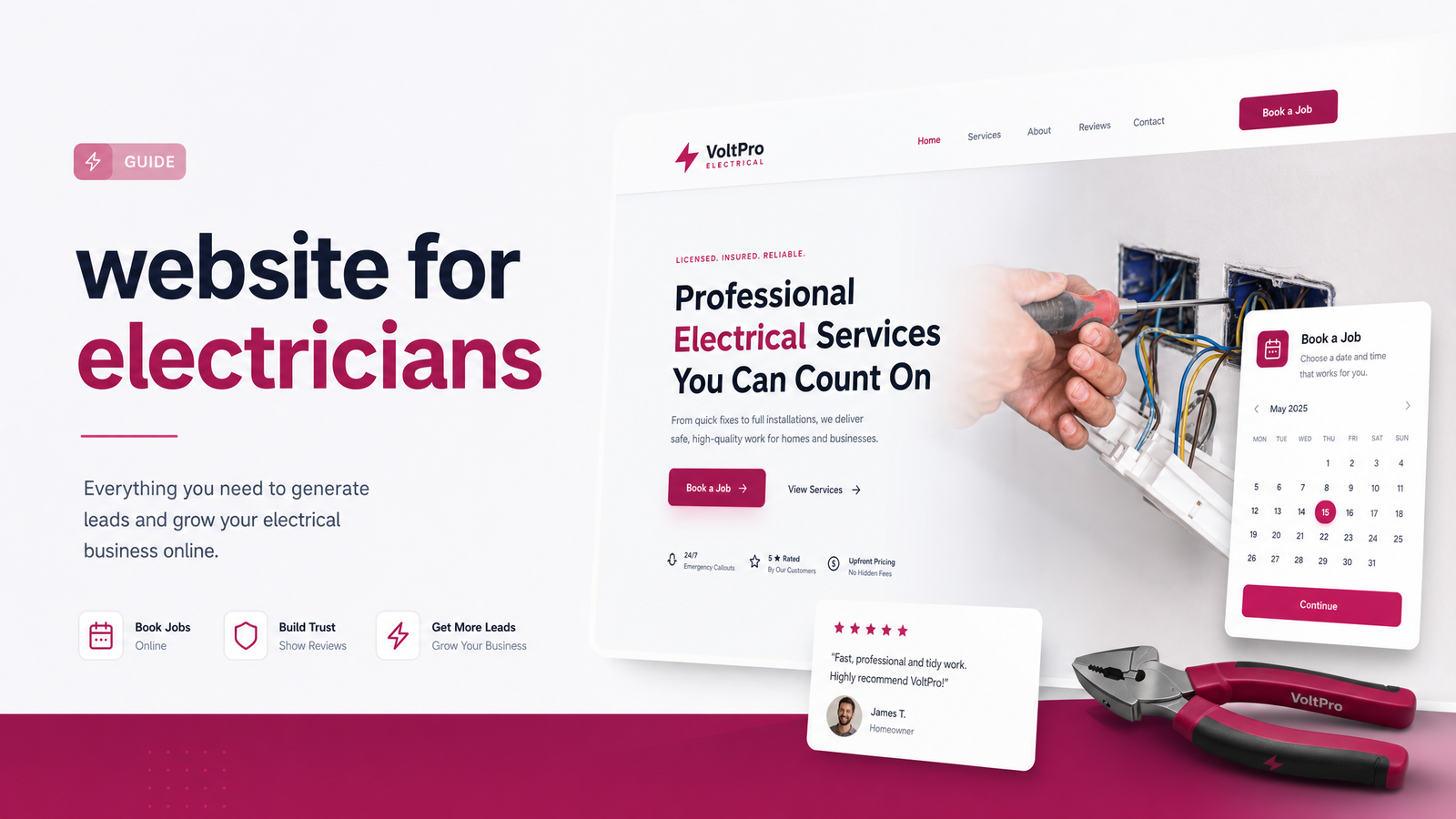
Click-to-call, above the fold, on every page. Someone with a sparking outlet isn't going to hunt for a contact page — they need a tappable number the instant the page loads, especially on mobile.
Service pages by job type, not one vague "services" paragraph. Panel upgrades, EV charger installation, rewiring, lighting, and emergency or 24/7 service each deserve their own page, since each attracts a different search and a different level of urgency.
Clear service-area coverage. Electricians work within a radius, and Google — along with the homeowner reading the page — needs to see the towns and neighborhoods you actually cover, not just a city name in the footer.
Licensing and certification badges, visible, not buried. This matters most in trades where the customer trusts someone in their walls and panel; a license number and insurance mention does real trust-building work.
Real job photos instead of stock images. Homeowners have gotten good at spotting a stock photo of a smiling actor in a hard hat, and it costs trust the moment they do — branding research shows people distrust generic imagery and look for proof of a real, professional site before hiring. A handful of photos from your last five jobs will outperform a stock library every time.
Good electrician website design isn't about looking impressive — it's about answering "can I trust this person in my house" in under ten seconds.
Reviews Are Your Strongest Sales Page
Testimonials you hand-picked and typed up yourself carry a fraction of the weight live Google reviews do, because visitors know you didn't write your own praise — but you also can't fully control what shows up on Google. The fix is surfacing your actual Google reviews directly on the site, not replacing them with curated quotes.
Volume and rating both matter for an electrician reviews strategy. A handful of five-star reviews reads as new or untested; a long list with an occasional 4-star mixed in reads as real and earns more trust. Industry benchmarks tie both review volume and rating consistency to stronger local search visibility, so a visible Google reviews widget does double duty — building trust on the page and helping it rank.
Mobile Speed and Simple Forms Decide Who Gets the Call
A large share of "electrician near me" and emergency searches happen on a phone, often from someone standing in a dark hallway or watching water drip near an outlet. If your site takes more than a couple of seconds to load on that connection, they're already tapping back to the search results — conversion research on electrician sites consistently shows mobile speed and simplicity driving the bulk of call volume.
This is also where forms quietly kill leads. A long contact form asking for address, job description, preferred time, and referral source feels like homework to someone in a hurry — most will simply call instead, or leave. A short form, or better, a booking widget that lets someone pick a rough time slot in three taps, converts far better because it matches how urgently they're searching. A mobile-friendly electrician website isn't a nice-to-have; for emergency and same-day work, it's the deciding factor in whether the call comes to you or your competitor.
DIY Builder, Freelancer, or Done-for-You: A Quick Gut Check
Before picking a route, ask yourself three questions:
- Do I have real hours — not spare minutes — to write copy, take photos, and set up forms correctly?
- Do I know enough about technical SEO and hosting to avoid a slow, unindexed site sitting invisible on page three of Google?
- Is my time worth more spent on jobs than on learning an electrician website builder?
If you answered "not really" twice or more, a DIY builder will likely cost you more in lost jobs than it saves in fees, and hiring a freelancer piecemeal often leaves gaps between design, copy, and SEO that nobody owns. For the deeper comparison of costs, timelines, and trade-offs between these three paths, see our plumbing-focused conversion guide, which applies just as well across trades.
What It Should Cost You
Pricing for a professional electrician website varies with scope — number of service pages, whether you need booking integration, and how much content needs writing from scratch — but a done-for-you build from a small studio typically lands well below what a full marketing agency charges, while still covering copy, photos, and setup. For a full pricing breakdown across website types and what drives the cost up or down, read our guide on business website costs. If you also need the basics explained, our piece on domain and hosting covers what you're actually paying for behind the scenes.
Get a Website Built for You, Not by You
You now know what a job-generating website for electricians actually requires — but writing service-page copy, shooting real job photos, wiring up a booking widget, and fixing the technical SEO that gets you found all take real hours most electricians don't have between jobs. Launchevra builds that site for you: our websites for contractors and trades service handles the design, copy, and setup so you're not learning a builder on your lunch break. Check Pricing for a clear quote, or start at Launchevra to see how a done-for-you build gets you live faster than doing it yourself.
Frequently Asked Questions
Do I really need a website if I already get jobs from referrals and Facebook?
Yes — most homeowners still research a contractor online before hiring, even when a referral pointed them your way, and a weak or missing website can lose that job to a competitor with a stronger site. Referrals and Facebook bring attention, but a proper website closes the trust gap and converts that attention into a booked call.
What pages should an electrician website have?
At minimum: a homepage with click-to-call visible immediately, individual service pages for panel upgrades, EV chargers, rewiring, lighting, and emergency service, a service-area page, an about/licensing page, and a reviews section pulling live Google reviews. Generic "services" and "contact" pages alone aren't enough for the trade-specific trust and urgency involved.
How much should I expect to pay for an electrician website?
Costs vary by scope, but a professional done-for-you build typically costs less than a full marketing agency while still including copy, photos, and setup. See our full cost breakdown for specific ranges by feature set.
Can I use a free website builder for my electrical business?
You can, but free builders often struggle with page speed, technical SEO, and the trade-specific structure electrician sites need, which can cost more in lost jobs than a paid build would. They're workable as a stopgap but rarely competitive long-term against a professionally built site.
How long does it take to get an electrician website live?
A done-for-you build typically launches in a matter of weeks once copy, photos, and service details are gathered, while a DIY build can take much longer if squeezed between jobs. Timeline mainly depends on how quickly you can supply job photos and licensing details.
Should my electrician website have pricing on it?
General price ranges or starting rates can help, but exact quotes usually depend on job specifics, so most electrician sites are better served by a clear "request a quote" or booking widget than fixed pricing tables. Transparency about ranges builds trust without locking you into a number before you've seen the job.
Originally published on Rankevra.