
Website Design for Plumbers That Actually Converts Calls
16 September 2026
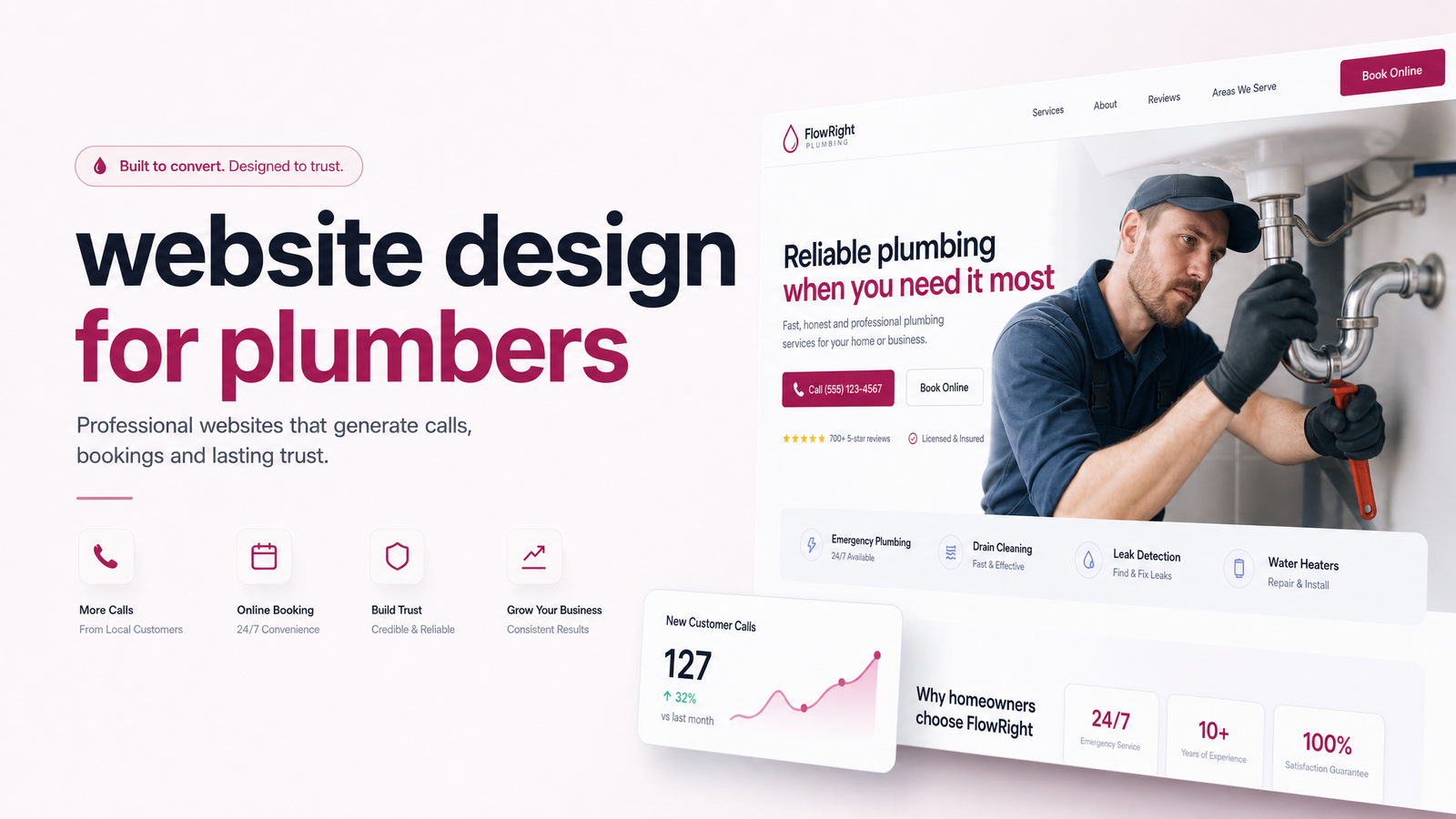
Why Most Plumbing Websites Don't Convert
Search "plumbing website examples" and you'll find rows of nearly identical templates: a hero photo of a wrench, a stock photo of a smiling technician, a paragraph about "quality service since 1998," and a contact form buried three scrolls down. It looks like a website. It doesn't work like one.
Plumber website design fails because it's built like a brochure, not a tool for someone in a hurry. A homeowner with a burst pipe isn't reading your company history — they're scanning for a phone number, and if they don't find one in seconds, they hit back and call the next listing. The plumber who answers fastest or looks most trustworthy online gets the job, even if their actual work is no better. That's the real cost of a slow, generic, DIY-built site: not bad traffic, but traffic that leaves without calling.
Design for Two Different Visitors: Emergency vs. Scheduled
Every plumber website has to serve two very different people without splitting into two separate sites.
The first is searching "emergency plumber near me" at 11 p.m., stressed, on a phone, ready to call whoever responds. For this visitor, speed and reassurance matter more than anything — a visible phone number, a short line confirming 24/7 availability, and zero friction between landing on the page and dialing.
The second visitor isn't panicking. They're comparing a few local companies for a water heater install or bathroom remodel, checking reviews, service areas, and pricing signals before booking. This person wants proof of quality and is more likely to fill out a form than call immediately.
The fix isn't two sites — it's one homepage structured in layers. Lead with urgent, emergency-friendly messaging and a call button above the fold for the panicking searcher, then let the page unfold into reviews, service details, and trust signals for the calmer researcher scrolling further down. A well-built website for a plumbing business accommodates both without forcing either to dig.
The Must-Have Elements of a High-Converting Plumber Website
Before deciding whether to redesign anything, audit what's already on your site against this list. Most plumbing company website design problems come down to missing or misplaced basics, not lack of polish.
- Click-to-call above the fold. Your phone number should be tappable, visible without scrolling, and repeated in the header on every page — not hidden in a footer or contact form.
- Real job photos, not stock images. Before/after shots of actual repairs and installs build more trust in five seconds than any paragraph of copy.
- Licensing and insurance badges. Displaying license numbers and insurance status near the top reassures visitors comparing multiple companies and signals you're not a fly-by-night operation.
- Reviews near the fold. A star rating and a couple of short quotes close to the top do more conversion work than a full testimonials page nobody scrolls to.
- Service-area pages. Individual pages for each town or neighborhood you serve help both visitors and search engines understand exactly where you work.
- Fast load speed. A page that takes more than a few seconds to load on mobile loses emergency searchers before they even see your number.
This same checklist applies broadly to website design for contractors and trades — plumbers just feel the urgency piece more acutely because so many searches are genuine emergencies.
Local SEO: Getting Found Before You Get Clicked
A great homepage doesn't help if nobody finds it. Local SEO for plumbers starts with alignment between your website and your Google Business Profile — matching business name, phone number, and service areas exactly, since inconsistencies quietly hurt your ranking in the Map Pack.
Service-area pages do double duty: they give Google specific, relevant content for "plumber in [town]" searches, and they let searchers self-select into the right page instead of landing on a generic homepage. Mobile-first indexing means Google evaluates your mobile site as the primary version of your business, so a site that's cramped or slow on a phone can quietly underperform in rankings even if the desktop version looks fine. Site structure and local search visibility aren't separate projects — they're the same project, viewed from two angles.
What It Costs and How Long It Takes
Pricing for a professional plumbing website varies with scope, but owners should be wary of two extremes: free builders that produce generic, slow sites, and custom agency quotes that stretch into the thousands with months of back-and-forth. A reasonable middle ground gets you a fast, mobile-optimized site with service-area pages and review integration without a drawn-out build process. For a broader breakdown of what drives cost of a website for a plumber up or down, see Average Cost of Website Design for a Small Business in 2026. For exact done-for-you pricing, check Pricing directly — most owners are surprised it's less than they expected, and a professionally built site can go live in days rather than months.
DIY, Freelancer, or Done-for-You: Which Fits a Plumbing Business?
Owners generally weigh three paths. A DIY plumber website builder is cheap and gives full control, but it demands time most tradespeople don't have between jobs, and the result often looks and loads exactly like every other template site. Hiring a freelancer can produce a custom result, but quality and reliability vary widely, timelines can slip, and you're often on your own for ongoing updates and hosting once the project wraps.
A done-for-you service splits the difference: professional design and copy, service-area pages and review integration built in, and someone else handling the technical upkeep — all without you learning a page builder or managing a freelancer relationship. For a plumber juggling calls, crews, and job sites, that trade-off usually favors done-for-you. If you want the fuller comparison, Website Builders for Contractors: DIY vs. Done-for-You walks through it in more depth.
Get a Plumbing Website Built For You
Launchevra builds done-for-you websites for plumbers and trades — click-to-call placement, review display, service-area pages, and load speed handled from day one, not bolted on later. Visit Websites for contractors and trades to see what's included, or check Pricing to see exact costs before you commit to anything.
Frequently Asked Questions
How much should a plumber pay for a website?
Costs vary by scope, but a professional, mobile-optimized site with service-area pages typically costs far less than custom agency work while avoiding the limitations of free builders. Check Pricing for exact done-for-you rates, and see the broader cost guide linked above for context on what drives price up or down.
Do I really need a website if I already get leads from Google Business Profile?
Yes — a Google Business Profile and a website serve different purposes and work best together. Your profile gets you into the local Map Pack, but your website is where visitors verify licensing, read fuller reviews, browse service areas, and ultimately decide to call rather than keep comparing options.
What's the single most important thing on a plumber's homepage?
A visible, tappable click-to-call phone number above the fold. Emergency searchers decide within seconds whether to call, and if the number isn't immediately obvious, they move to the next listing.
Can I just use a free website builder for my plumbing business?
You can, but free builders usually produce slow, generic-looking sites that struggle to convert stressed, phone-first visitors. They also tend to lack proper service-area pages and can hurt your mobile load speed, which matters for both conversions and local search ranking.
How long does it take to get a professional plumbing website live?
A done-for-you build can go live in days, while freelancer projects often take weeks to months depending on availability and revisions. DIY timelines vary most, since they depend entirely on how much time the owner can dedicate around actual plumbing work.
Does a plumber website actually need a blog for SEO?
Not necessarily as a priority — service-area pages, review integration, and page speed do more for local ranking and conversions than blog content for most plumbing businesses. A blog can help over time, but it shouldn't come before the core conversion elements are in place.
Originally published on Rankevra.