
Website Design for Cafes: What Every Site Needs to Convert
18 September 2026
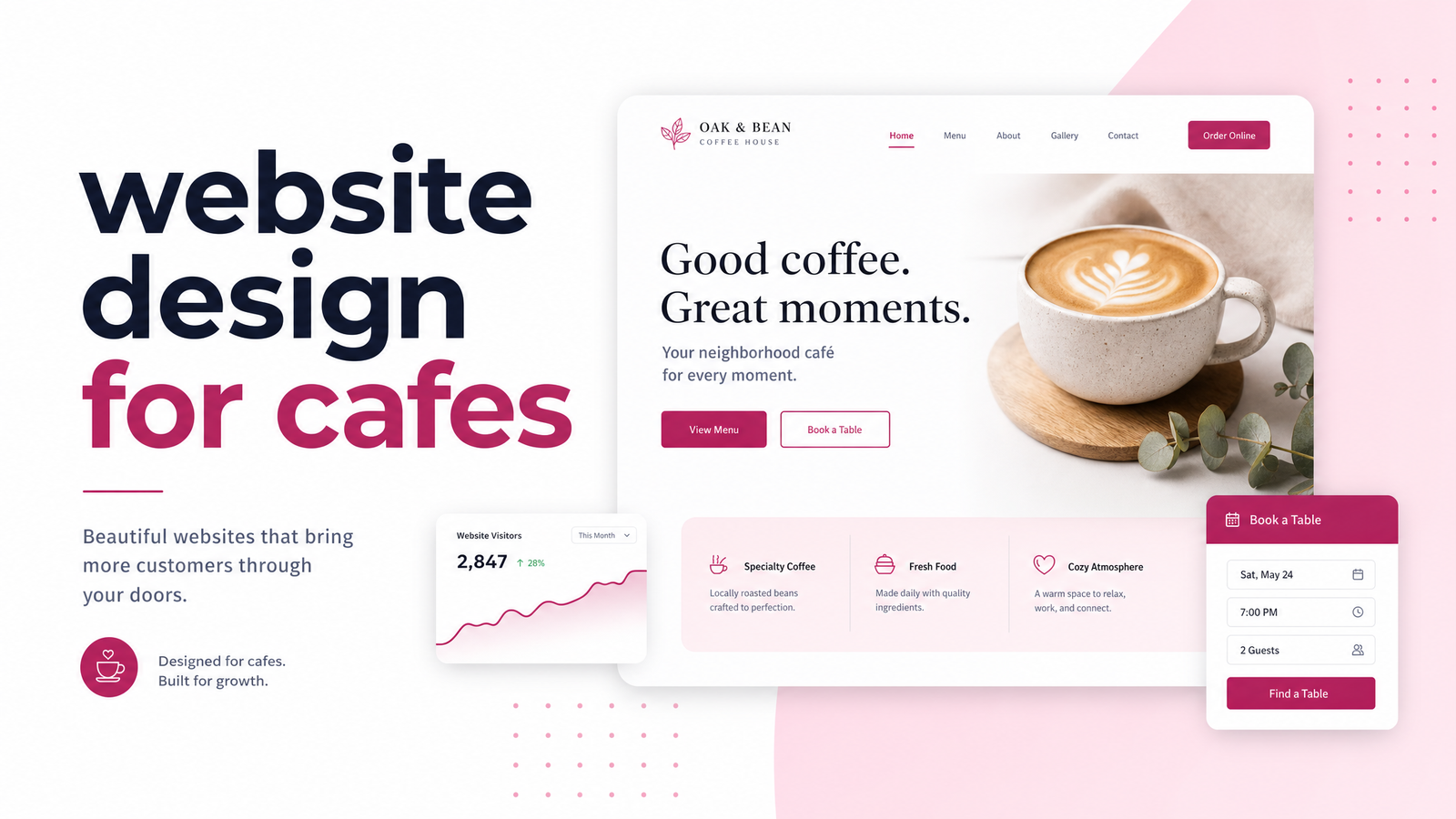
Why Your Cafe Needs More Than Instagram and Google Maps
Plenty of cafe owners assume a nice Instagram feed and a Google Maps pin cover the bases. They don't. A customer scrolling Instagram is browsing entertainment, not deciding where to get coffee at 8:15am on a Tuesday. Before they walk in — or tap "order" — a huge share of customers check a website first to confirm hours, see the menu, or figure out if the place fits what they're craving.
That gap matters because social platforms and map listings are rented land. Instagram can change its algorithm tomorrow. Google can alter how your Business Profile displays. A cafe website is the one channel you fully own and control — nobody can throttle its reach, bury your menu, or change your hours without your permission. It's also the only place you can say exactly what makes your espresso, your oat milk latte, or your Sunday brunch worth the trip, in your own words, formatted the way you want.
Good website design for cafes isn't about looking trendy. It's about giving an undecided, often distracted person the exact information they need to become a paying customer, fast.
The 3 Questions Your Homepage Must Answer in 5 Seconds
Most cafe homepage visits happen on a phone, often while someone is standing outside deciding whether to walk in, or sitting on a bus deciding where to stop. That person isn't going to scroll through a mission statement. Your cafe website homepage has about five seconds to answer three questions:
- What do you serve? Coffee, pastries, brunch, specialty drinks — shown in a photo or a single line, not buried in a paragraph.
- Where are you, and are you open right now? Address and today's hours, visible without clicking anything.
- How do I order or visit? A clear next step — directions, a phone number, or an order button.
If any of these takes more than a glance to find, the visitor bounces back to search results and tries a competitor instead. This is where mobile-first cafe website design earns its name: large tap targets, hours that update automatically, and a map that loads instantly rather than a static image. Everything else — your story, roastery partnerships, interior photos — belongs further down the page, not competing for that first five seconds.
The Menu: Your Most Important Conversion Tool
The menu is the single most-viewed page on almost every cafe website, and it's also where most sites fail. A shocking number of cafes still link to a PDF menu — a scanned or exported document that looks fine on a laptop and falls apart on a phone. Visitors have to pinch, zoom, and scroll sideways just to read prices. Many give up before they finish.
The SEO problem is just as serious. Search engines can't easily read text trapped inside a PDF the way they read text on a normal web page, so your dishes, prices, and dietary options don't show up in Google search results the way they would on a proper HTML menu. That's a direct hit to your visibility for searches like "flat white near me" or "gluten-free pastries [your town]."
A proper cafe website menu should be built as real, searchable text on the page itself — not an image, not an attachment. Pair each section with a few appetite-driving photos, keep pricing current, and tag dietary details (vegan, gluten-free, decaf) clearly so customers with restrictions don't have to call and ask. This single fix — swapping a PDF for a real online menu — is often the highest-impact change a cafe can make to its site.
Ordering, Reservations, and Loyalty: What's Worth Adding
Not every cafe needs every feature, and piling on tools you'll never maintain is its own mistake. Here's a practical way to think about it:
- Online ordering makes sense if you already handle takeout volume or want to reduce line congestion during rush hours. A cafe online ordering website integration (or a clear link to your existing ordering platform) can genuinely lift ticket sizes for regulars who order ahead.
- Table reservations rarely matter for a counter-service coffee shop, but they're worth adding if you run brunch service or have limited seating that fills up on weekends.
- A loyalty program signup is worth a simple page or embedded form if you already reward repeat customers — a coffee shop loyalty program website section can convert casual visitors into regulars — but skip it if you don't have the bandwidth to run one consistently.
The goal is a site that does a few things well, not one trying to be a delivery app, a booking system, and a rewards platform all at once.
Local SEO Basics Every Cafe Website Needs
A cafe website and a Google Business Profile should reinforce each other, not compete. Local SEO for cafes starts with NAP consistency — your Name, Address, and Phone number must match exactly across your website, Google Business Profile, and any directory listings. Mismatches confuse search engines and can quietly suppress your ranking for "coffee shop near me" searches.
Beyond that, a few technical basics matter: an embedded Google Maps location on your contact or homepage, a fast-loading site (cafe customers on mobile data won't wait for a slow page), and structured data that tells search engines your hours, address, and menu items in a format they can actually parse. These are the kinds of fixes that don't show up in a design mockup but make a measurable difference in whether you appear in local search results at all.
DIY Builder vs. Done-for-You: What's Realistic for a Busy Cafe Owner
A cafe website builder can get a basic page online, but running a cafe already fills every hour of your day. DIY platforms require you to write copy, source and edit photos, configure mobile layouts, fix SEO settings, and keep updating hours and menu prices — on top of opening, closing, ordering stock, and running a team. Most half-finished cafe websites exist not because the owner didn't care, but because there was never a free afternoon to finish the job properly.
A done-for-you website design service builds the site for you — copywriting, menu formatting, mobile optimization, and local SEO setup included — so you're not learning web design on the side. Launchevra's local business websites are built specifically for shops, restaurants, and cafes that need this handled properly and quickly, without the owner touching a page builder.
Frequently Asked Questions
Do I really need a website if my cafe is already on Instagram and Google Maps?
Yes — Instagram and Google Maps are useful, but neither gives you full control over your menu, hours, and messaging the way a website does. A website is also where structured, searchable information (like your menu text) can actually help you rank in Google search, which social platforms and map listings can't fully replace.
How much should a cafe website cost?
Costs vary depending on features like online ordering, custom photography, and page count, but a done-for-you small business site is generally a modest, predictable investment rather than an ongoing DIY time cost. See Launchevra's pricing for plan details, or read the full breakdown in How Much Does a Business Website Cost in 2025?.
Should my cafe website have online ordering, or just a menu?
It depends on your takeout volume — cafes with steady to-go business benefit from online ordering, while smaller counter-service shops may only need a clear, well-formatted menu with visit and contact details. Adding ordering you can't fulfill quickly creates a worse customer experience than not having it at all.
What's the biggest mistake cafe owners make with their website?
Using a PDF menu is the most common and most damaging mistake — it's hard to read on mobile and largely invisible to search engines, hurting both conversions and local SEO. The second most common mistake is outdated hours, which sends customers to your door when you're closed.
Do I need a separate page for each menu item, or is one page enough?
One well-organized menu page is enough for almost every small cafe — clear sections, real text (not images), photos, and prices. Separate pages per item add maintenance work without meaningfully improving customer experience or search visibility for a typical coffee shop menu.
How long does it take to get a cafe website live?
With a done-for-you service, a cafe website can typically go live in a matter of days to a couple of weeks, depending on how quickly menu content and photos are provided. DIY builds often take much longer in practice, simply because they compete with the daily demands of running the cafe.
Ready to see what this looks like for your own cafe? Launchevra builds done-for-you websites for shops and restaurants like yours — browse websites for local businesses or check pricing to get a free mock-up quote and skip the DIY builder altogether.
Originally published on Rankevra.